New international agreements aim to make platform work more future-proof
From 1 to 12 June, representatives of workers, platform companies and governments from around the world will gather in Geneva at the International Labour Organisation (ILO) to discuss an international ‘ILO Platform Work Convention’. This is a unique event where the interests of all workers on the labour market will be addressed. In this blog, platform expert and researcher Martijn Arets looks ahead from an international perspective at what will be discussed and what is at stake.
Platform companies are the everyday gateway to work for between 154 million (full-time) and 435 million (full-time and part-time) workers worldwide. In 2022 the number of platform workers in Europe was estimated at 28 million, with the prediction that this figure would rise to 43 million by 2025. Although exact figures are lacking and the number also depends heavily on the definition used, there is agreement that the number of people using the services of online platform companies to access work is growing.
Having become popular in sectors such as food delivery and taxis, there is now virtually no sector in which platform companies are not active. The platform economy is also sometimes referred to as the ‘incubator and testing ground’ for technology in the labour market, indicating that the impact of developments within the platform economy and the way it is structured has consequences for the entire labour market.
Although platform work is often viewed from a local, national or continental perspective, it is also a global phenomenon in many respects. Platform companies often operate internationally and, in the case of online work, the supply and demand for work are often located in different countries, and in many cases on different continents. Furthermore, platform companies keep a close eye on one another, meaning that a working method or business model in one country can quickly gain a foothold in others. Reaching agreements on platform work at a global level is the subject of this and next week’s 114th International Labour Conference in Geneva. Here, representatives of workers, employers (the platform companies) and governments are coming together to negotiate the ‘Platform Work Convention’.
A historic moment
The fact that platform work features so prominently on the agenda in Geneva is historic for several reasons. Platforms facilitate sectors which, even before the rise of the platform economy, were known for the precarious conditions of their workers. Think of food delivery, domestic work, childcare and non-location-bound work that was outsourced to countries such as India, the Philippines, Kenya and Mexico. Sectors, often operating in the informal market, where everyone knew that conditions for workers were frequently harsh. And which, partly due to the invisible (fragmented) nature of the market and the low level of unionisation, meant that governments and representatives could often afford to ignore this group of workers. Invisibility led to a lack of political urgency to take action. Platform companies control these markets as the intermediary between a fragmented group of suppliers (workers) and customers, which drives market growth but also leads to increasing one-sided dependence on and influence by technology. The visibility of these companies and the growing dependence of workers have meant that sectors which were ignored for years are suddenly in the spotlight. The fact that the future of these sectors is on the international agenda is, if you ask me, historic.
Historic also because the process leading up to the convention – read here the ‘draft text’ that forms the starting point for the negotiations – has ensured that workers’ representatives worldwide have come together in recent years to draw up a joint agenda. For instance, a global coalition of more than 30 workers’ organisations, trade unions and civil society organisations published a joint statement in the run-up to the ILC, and last year saw the launch of the ‘Global Platform Workers Solidarity Project (GPWSP)’, a “network of grassroots organisations for platform workers from more than 27 countries, supported by investors, civil society organisations and researchers”. I have never before seen workers’ representatives collaborating in this way across sectors, countries and organisations.
Finally, the discussion in Geneva is perhaps also historically complex. Complex because, despite the stark contrast in interests, representatives of workers and companies must agree on certain points. And complex because the structure of platform work often depends on the sector and the institutional environment in which it operates. And whatever emerges from Geneva must also be translated into national and sectoral levels. This may seem an impossible task, but in my view this is the only way forward: establishing international frameworks and then translating them into national policy.
How platform companies have changed the labour market
Platform work can be divided into both location-bound and non-location-bound work, where unique or generic skills are required and technology has a low or high degree of influence on access, execution, management, price setting and evaluation of work. What characterises the sector is that supply and demand operate in fragmented markets with significant information asymmetry. Work is broken down into small(er) assignments (‘gigs’) and the responsibility that normally lies with an employer has shifted to the individual worker. The platform company, acting as a ‘private regulator’, determines and enforces the terms and conditions of the ‘game’ via technology.
The emergence of platforms in some markets and regions has also led to markets becoming even more fragmented: by subsidising services such as taxi rides, the market was ‘bought’ and competition eliminated, meaning that individual workers could only find work via the platform. At the same time, the freelance model means that platforms can afford to maintain an ‘oversupply’ of workers, as the costs of not having work are borne by the individual worker. This also contributes to growing competition between individual workers and challenges in organising workers.

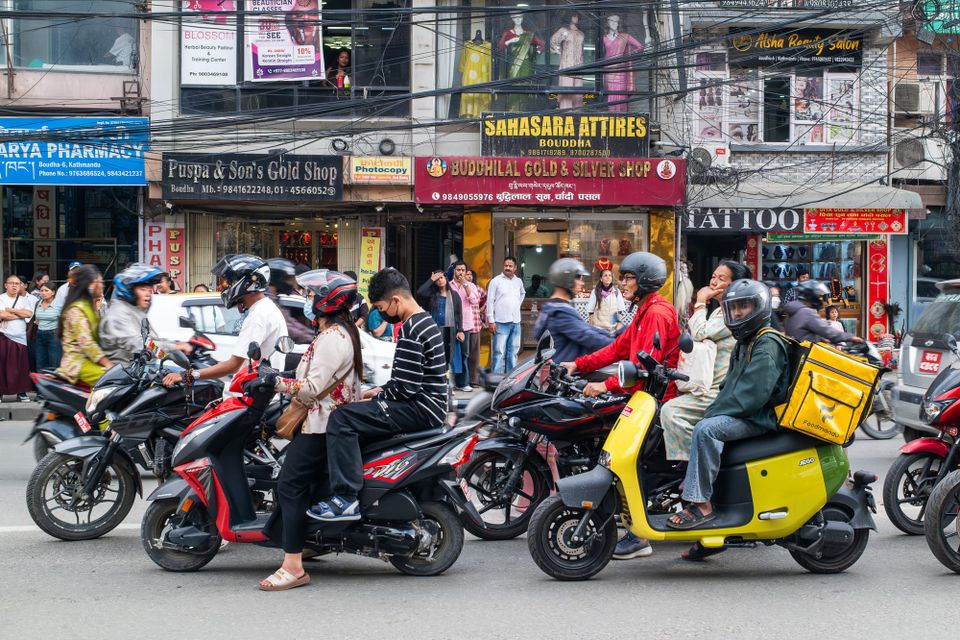
In many cases, the work carried out via platforms already existed before the emergence of platforms: even before Uber, Bolt and InDrive, there were taxi drivers, and before DoorDash, Deliveroo and Gojek, meals were delivered by couriers on (motor)scooters and mopeds. Cleaners also cleaned houses and babysitters looked after children whilst their parents went out for the evening. Platform companies have used technology to reduce the search costs between supply and demand, making it easier for both sides to operate in the market and enabling them to organise the market more efficiently. Due to the platform’s central position, there are also opportunities to implement changes centrally for a large group of workers (and customers), thereby influencing market conditions.
The biggest challenges (and solutions)
The central position that the platform company holds in a fragmented market is therefore unique. The challenge lies in the fact that the interests of all participants (demand, supply and the platform company) in a transaction are not always aligned, whilst there is only one party that determines the terms and conditions of the game: the platform company. And how to handle that responsibility, how to give everyone a (more) equal position in terms of information and decision-making, and how to use that position to ensure good conditions for workers is the central question in the discussion. The focus is on understanding and influencing automated decision-making processes, access to data, fair (or: decent) pay where the risks do not lie solely with the worker, and representation.
The lack of insight into automated decision-making processes is a major issue in many platform work sectors. Workers cannot make well-informed decisions and feel pressured by not knowing the ‘regulations’ for accessing the work on which they depend. The impact on workers is vividly described in the blog ‘From Recognition to Responsibility: Worker-Led Perspectives on Labour Standards for the Platform Economy’: “Data workers shared how task allocation is unpredictable, with no visibility into how work is distributed or why opportunities suddenly disappear. Similarly, workers do not know how their performance is assessed, what metrics are used, or how those assessments affect future work opportunities. Such decisions are made with little clarity on how automated processes and human oversight interact. Compounding these opacities, workers have no right to access the data generated through their labour, nor any ability to control how that data is used.”
A lack of access to data contributes to this lack of transparency and the power imbalance between workers and platform companies. In the article ‘Knowledge is power, even in the platform economy’ that I wrote earlier, former Uber driver James Farrar describes how he was hindered by this in a legal case against the platform. He then figured out a smart way, acting as a modern trade union, to obtain data to support his case. My own project, GigCV, shows that it is not at all complicated to share data at the worker’s request, with more than 100,000 platform workers having gained access to their experience data and data having been requested by workers over 32,000 times. My lesson from this is: if you do want something, you make it simple; if you don’t want something, you make it complex. That is why I also advocate being more critical of why systems and processes are made complex. Who benefits from this? Is it to improve the service, or to alter the balance of power and information? In the case of the increasing complexity of methods for calculating pay for on-demand work platforms, I believe the latter is certainly the case here. Enforcing simplification is also a solution in this regard.
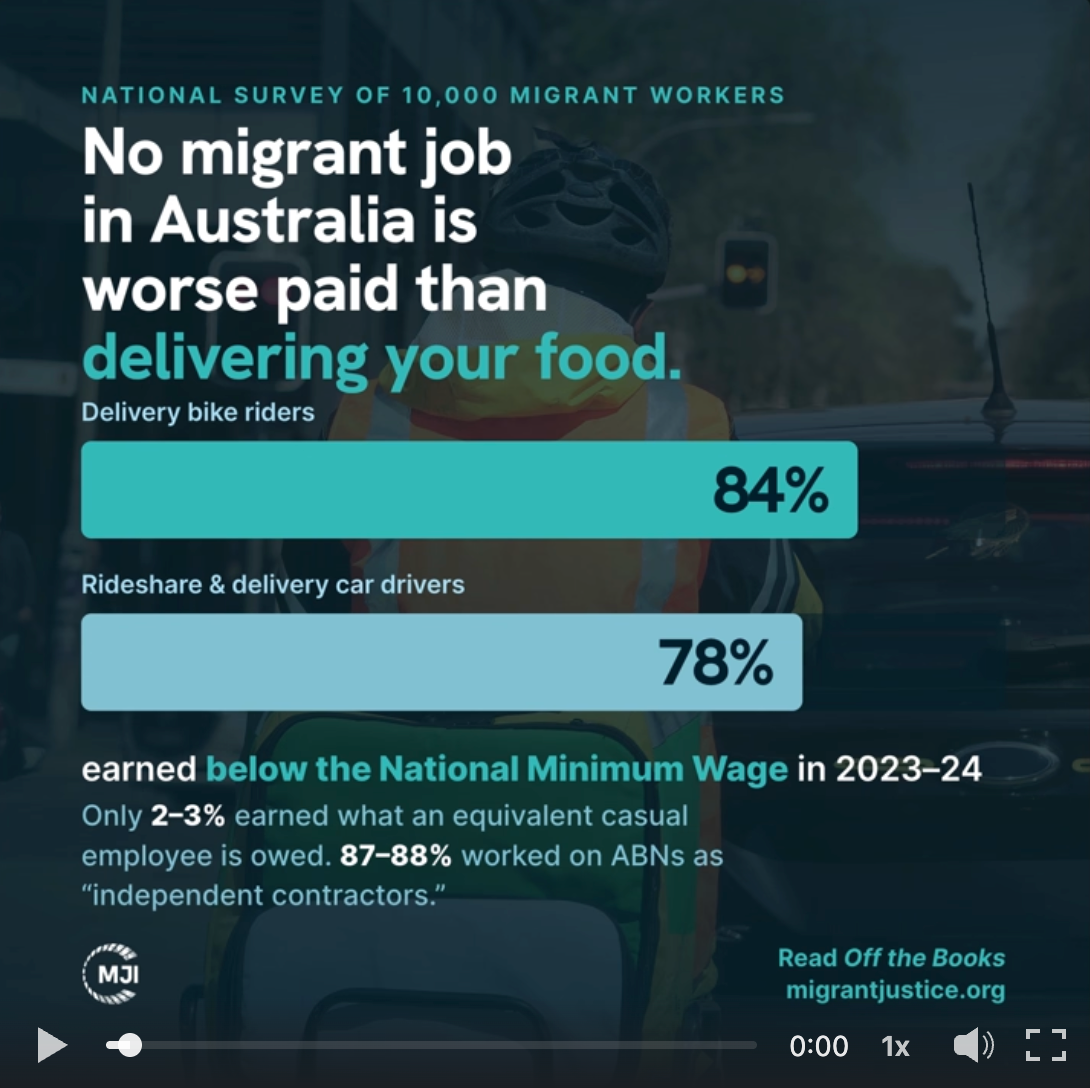
Remuneration and the classification of workers are common topics of discussion. Because platform workers are classified as self-employed by most platform companies, the costs and risks that normally fall on an employer now lie with the individual worker. It is widely known in platform sectors such as delivery and data work that workers often earn (well) below the minimum wage. One solution to this, and to other issues, is to employ the worker directly. And although this also has a significant impact on the market, the issue of bogus self-employment is a key item on the agenda in Geneva. I feel it is important to note that in many countries around the world, this does not always improve the worker’s position, and that in some cases where the platform has shifted from freelance to employee status, this has often been organised via subcontractors who also want a slice of the pie. Regardless of the type of contract, it is important that workers are paid a decent wage and that unpaid labour is prevented as much as possible. This is the principle behind the Living Tariff, which I am working on through the WageIndicator Foundation, whereby the costs and risks shifted onto the shoulders of individual workers are factored into the tariff.
Finally, representation. If there is one thing the ILC in Geneva demonstrates, it is that organisations representing workers are increasingly finding common ground. Successes are being achieved at an individual level, such as concluding collective agreements with platform companies and establishing an enforceable minimum tariff or minimum standards. Now is the time to achieve collective successes as well. It strikes me that there is a tremendous amount of information asymmetry in the landscape of worker representation. Not only is it not always clear who represents which workers, but agreements that are made are also difficult or impossible to find. For instance, collective agreements are not public in most countries around the world. And although the underlying motivations are perfectly understandable, this is truly a missed opportunity. Platform companies also benefit from this information asymmetry that is created in this way. That is why it is essential for organisations representing workers to see the bigger picture and also to focus on economies of scale and, as a standard, to make everything as public as possible. WageIndicator has analysed many hundreds of collective agreements worldwide in a database, but actually that is a bit crazy. In my opinion, standardisation and transparency on the part of representatives is a severely under-discussed topic in this debate.
To conclude
The discussion in Geneva is not ‘just’ about the gig economy, but about the rules governing the impact of technology on labour. You might say, ‘I’m not particularly worried about that’, but bear in mind that, certainly with the rise of AI, technology (and particularly the choices we make around it) is having a growing influence on the position and conditions of all workers. This applies also to you. It could simply mean that your job and position suddenly become precarious. This is an extra reason to take this debate seriously regarding the choices we must make concerning the increasing role of technology in the global labour market.
What can we expect during and after the ILC? Firstly: it is a victory for everyone that this topic is on the agenda. It is important to realise that this meeting is not an end point, but a fantastic opportunity to set an agenda and initiate (renewed) collaborations. Improving conditions for workers is a continuous and gradual process. And what will come of it? The outcome of the negotiations must be supported by representatives of workers, employers and governments alike. There are many conflicting interests that need to be reconciled. This could result in a very weak convention being put forward. Or no convention at all. Only time will tell.